
Hancock County Criminal Court Cases
Hancock Superior Court tries felonies and keeps the filed criminal case record. It sits in the Ocmulgee Judicial Circuit. The county directory does not list a State Court, so a searcher should not assume that every misdemeanor file sits in a separate state-court system. Venue follows the charge and the court that received it. Magistrate Court handles warrants, bonds, preliminary matters, and limited minor jurisdiction. Probate Court handles the traffic matters listed by Hancock County. Sparta Municipal Court keeps its own ordinance and traffic work, along with limited state-law matters assigned by statute.
The clerk is the custodian of Superior Court filings. A police report may explain an allegation, but it is not the court file. Likewise, a jail booking establishes custody, not the charge finally filed by the prosecutor. The county's official courts directory shows why picking the court comes before searching a name.
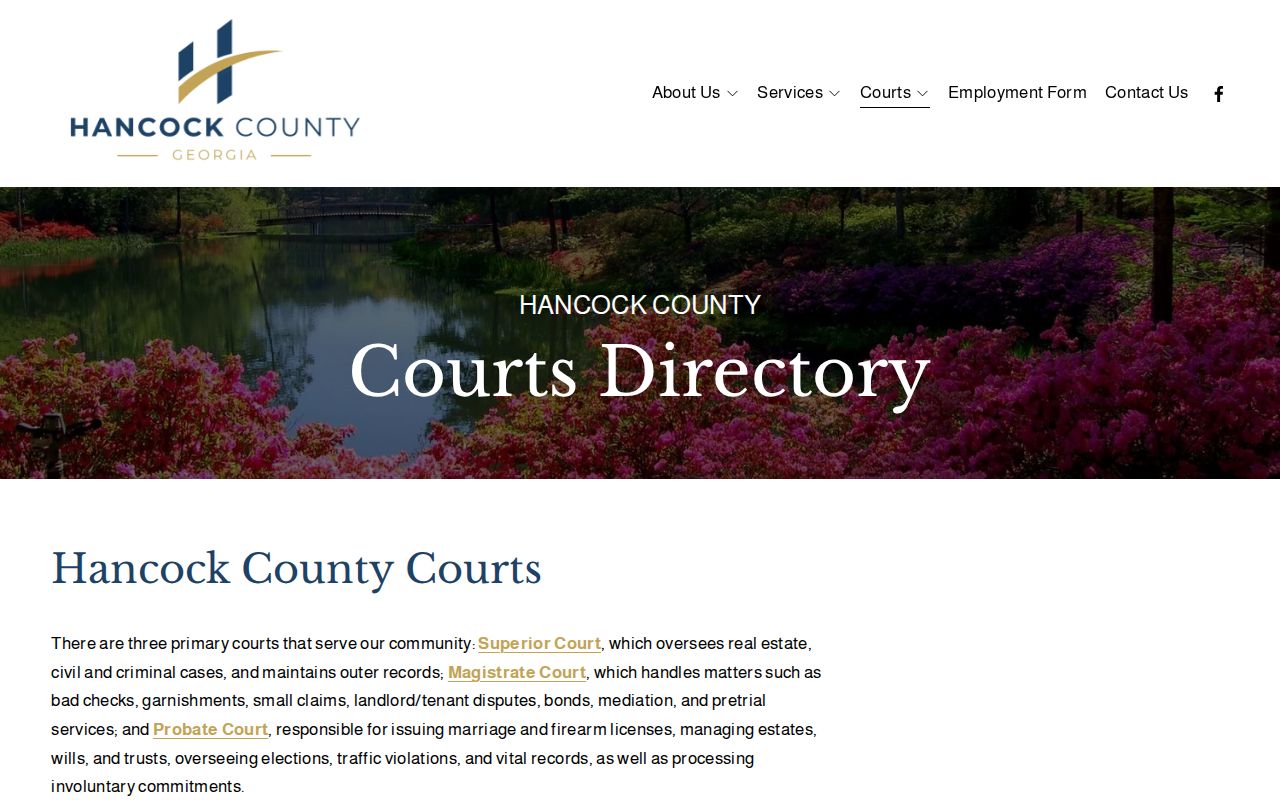
The directory view helps separate Superior, Magistrate, and Probate functions before a requester calls the wrong desk.
Choosing a Hancock Criminal Court
A felony accusation or indictment points to Hancock Superior Court. A warrant or bond issue may first appear through Magistrate Court, while a county-listed traffic matter can sit with Probate Court. A Sparta citation may instead belong to Municipal Court. That split matters when a PeachCourt search yields nothing. A missing result may signal a different venue, an unfiled matter, a name variation, an older paper file, or a login limitation. It does not prove that no case exists.
| Court | Criminal role | Official contact |
|---|---|---|
| Hancock Superior | Felonies and filed criminal records | 706-444-6644 |
| Hancock Magistrate | Warrants, bonds, and preliminary matters | 706-444-6234 |
| Hancock Probate | Listed traffic matters | 706-444-5343 |
| Sparta Municipal | Ordinance, traffic, and assigned state-law matters | 706-444-5753 |
Searching Hancock County Case Records
Georgia Courts E-Access is an official county-by-county directory, not one statewide case database. Selecting Hancock Superior Court routes the user to PeachCourt. An account is required. Official material supports party-name or case-number searches, but the live query is login-gated. The research could not verify required markers, dropdown choices, result limits, exact display fields, date coverage, or document prices without an account. Use only the fields the logged-in screen offers, and treat the clerk as the fallback for any uncertainty.
- Open Georgia Courts E-Access and choose Hancock Superior Court.
- Follow the official route to PeachCourt and sign in or create an account.
- Search by the party name or case number the portal permits.
- Read docket entries in date order and open only the available filed documents.
- Call or visit the Superior Court clerk for archives, missing files, plain copies, or certified copies.
The official E-Access screen demonstrates the county selection route.
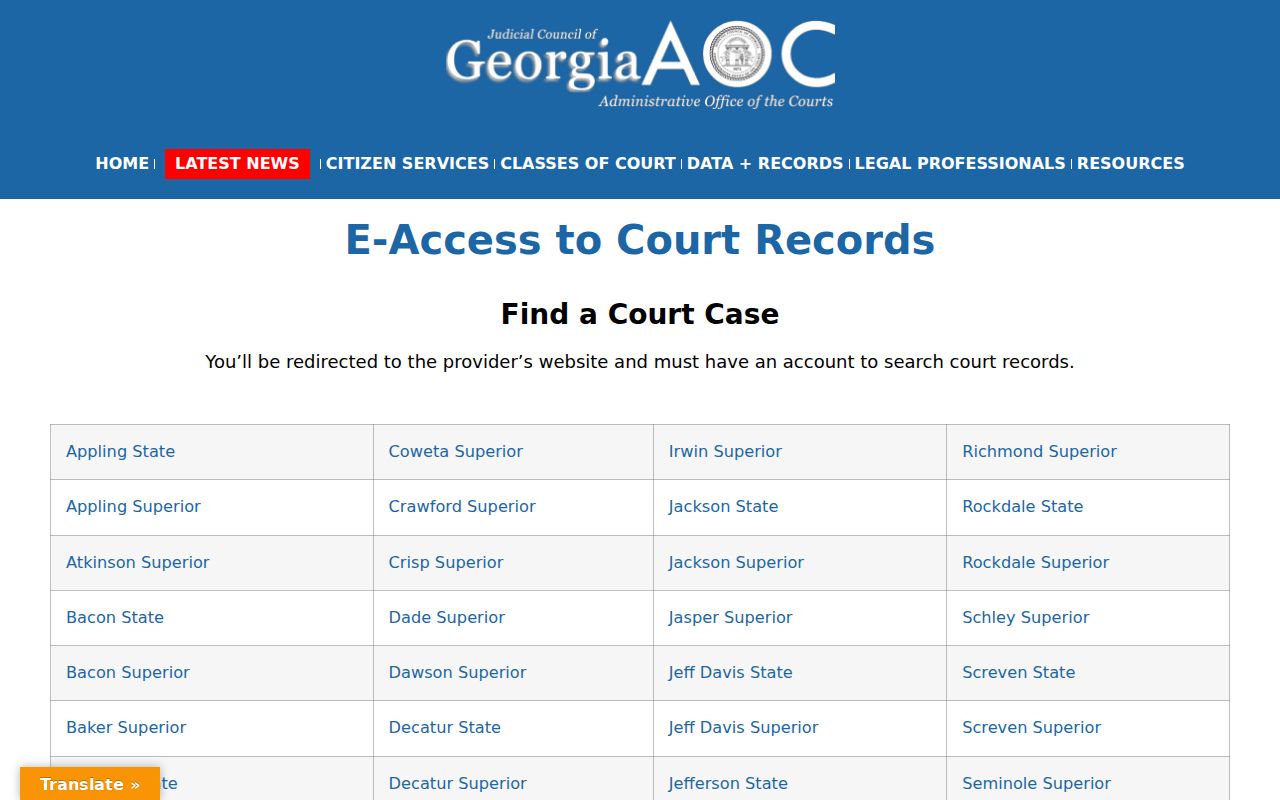
Its role is routing. The Hancock entry leads onward to the provider rather than exposing a statewide result list.
| Field Label | Type | Required | Notes |
|---|---|---|---|
| Party name | Search mode | Not verified | Official materials support name searching after login. |
| Case number | Search mode | Not verified | Use the full number when known. |
| Other filters | Login-gated | Unknown | Exact fields and dropdown values were not publicly visible. |
| Document access | Case-dependent | Unknown | Availability and price depend on the logged-in case. |
PeachCourt and Hancock Clerk Fallbacks
PeachCourt's public landing page offers account registration, password recovery, electronic filing, and court documents across Georgia. Its help line, 844-GA-EFILE, can assist with the electronic system. It is not the Hancock clerk and cannot decide whether a local paper or archived file exists.

The login screen explains why direct clerk access remains essential for people who cannot locate a Hancock County criminal court case online.
The Hancock Superior Court page identifies the clerk and the county's access systems. Call 706-444-6644 or visit 12630 Broad Street in Sparta during the posted weekday hours of 9:00 a.m. to 5:00 p.m. Give the case number when possible. If it is unknown, provide the party name and a useful date range, then ask staff what search help is available. Request archived files, plain copies, certified copies, and current charges as separate questions because Hancock does not publish those prices online.
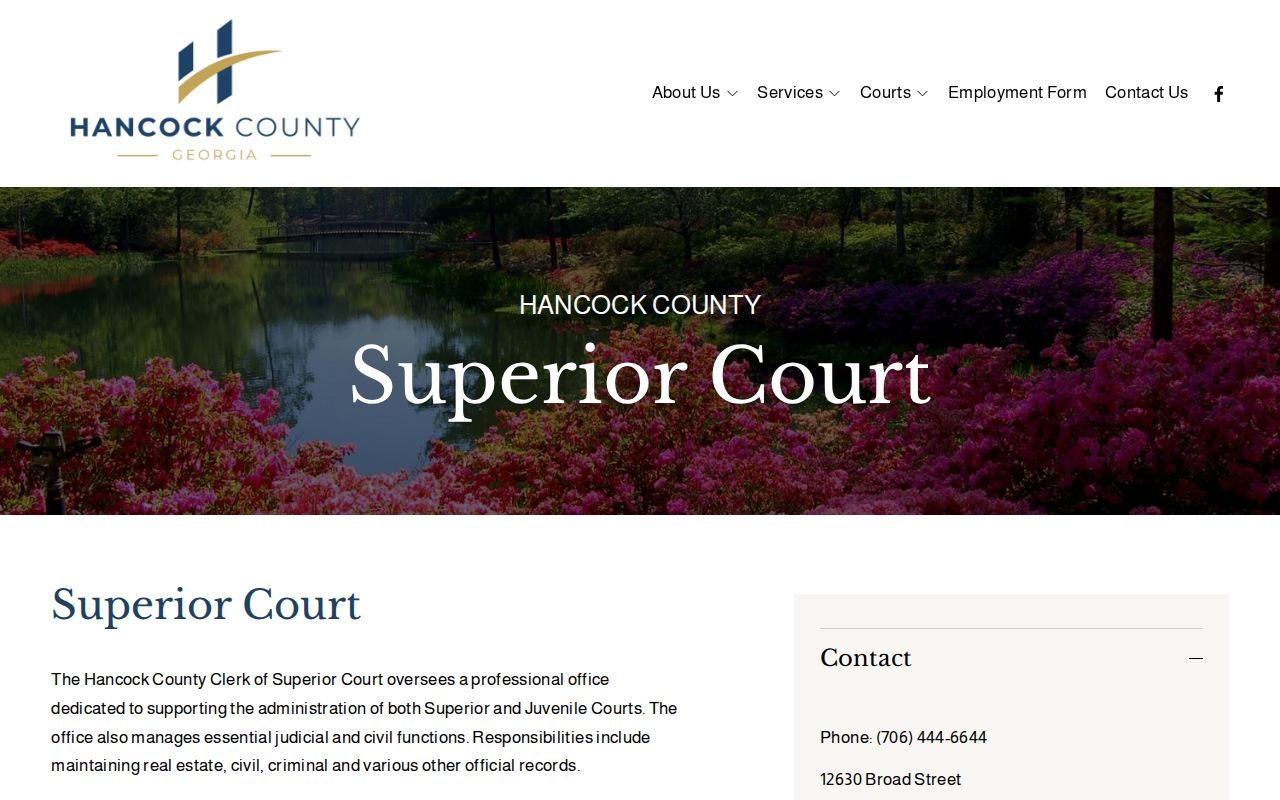
The clerk page is the authoritative local contact when the portal cannot answer a record-access question.
Inside a Hancock County Case File
A filed case can contain the charging paper, docket events, orders, judgment, disposition, and sentence. Uniform Superior Court Rule 36.13 also supports linkage between criminal filings, an applicable arrest warrant, and GCIC Offender Based Tracking System material. OBTS is the tracking link used to connect an arrest cycle with later court events. No public Hancock sample case was inspected because access is account-gated, so the table describes supported record categories, not guaranteed PeachCourt display labels.
| Case number and court | Identifies the filed matter and the court that owns its docket. |
|---|---|
| Charging document | An accusation or indictment states the charges the prosecutor filed. |
| Docket entries | A dated register of filings, hearings, orders, and other case events. |
| Orders and motions | Filed requests and the judge's rulings when public. |
| Disposition and judgment | Shows how the filed charge ended, such as conviction, dismissal, or another recorded outcome. |
| Sentence | States the court-imposed result and any terms shown in the public order. |
Reading Hancock Criminal Case Outcomes
A disposition is the recorded result of a charge. It is more useful than a booking entry when the goal is to learn how a filed prosecution ended. “Nolle prosequi” means the prosecutor formally chose not to proceed with that charge at that time. A dismissal ends the charge by court action or another authorized process. “Dead docket” places a matter on an inactive docket without producing a conviction, but it is not the same as an acquittal or a destroyed file.
Read each charge separately. One Hancock County criminal case can contain different results for different counts. A plea may resolve some counts while others are dismissed. Also check for a later amended order, sentence, or appeal entry. When a summary label is unclear, request the filed disposition and judgment from the Superior Court clerk. That document provides firmer evidence than a portal snippet or a filing alert. For one's own state criminal history, a missing court outcome should be corrected through the court or prosecutor responsible for reporting it to GCIC.
Hancock Certified Files and Alerts
Two GSCCCA tools serve narrow jobs. eCertify handles electronic certified-document requests in participating counties through a universal account. Its public Authentication Code field checks a certificate already issued. It does not find a criminal case. The service terms state a 3.5% card-processing charge, while the underlying Hancock copy and certification costs were not published.
The eCertify interface makes the authentication field's limited purpose clear.
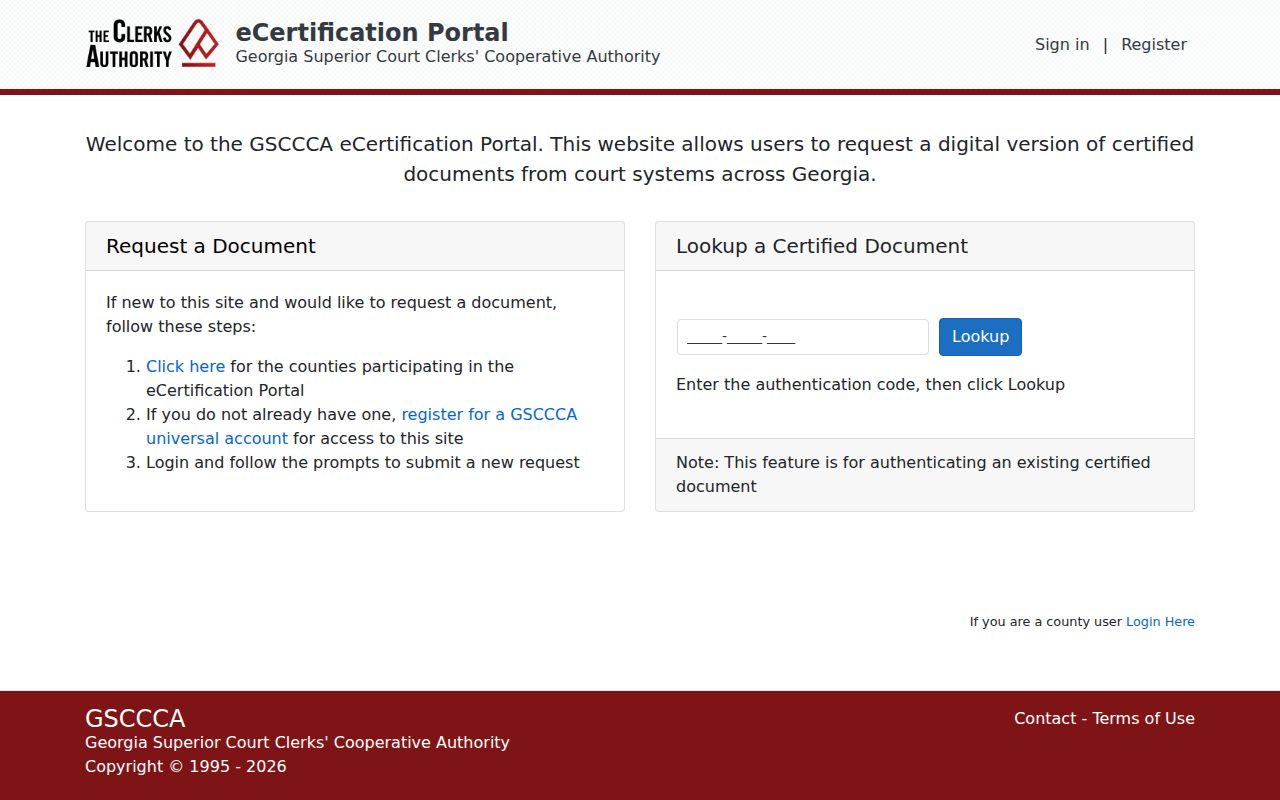
A valid code confirms an existing electronic certificate. It does not show whether a later Hancock court order was filed.
FANS, the Filing Activity Notification System, can send email when a filing is recorded under an enrolled name in a participating county. The official FANS enrollment page is useful for monitoring, but an alert is neither identity proof nor a disposition.
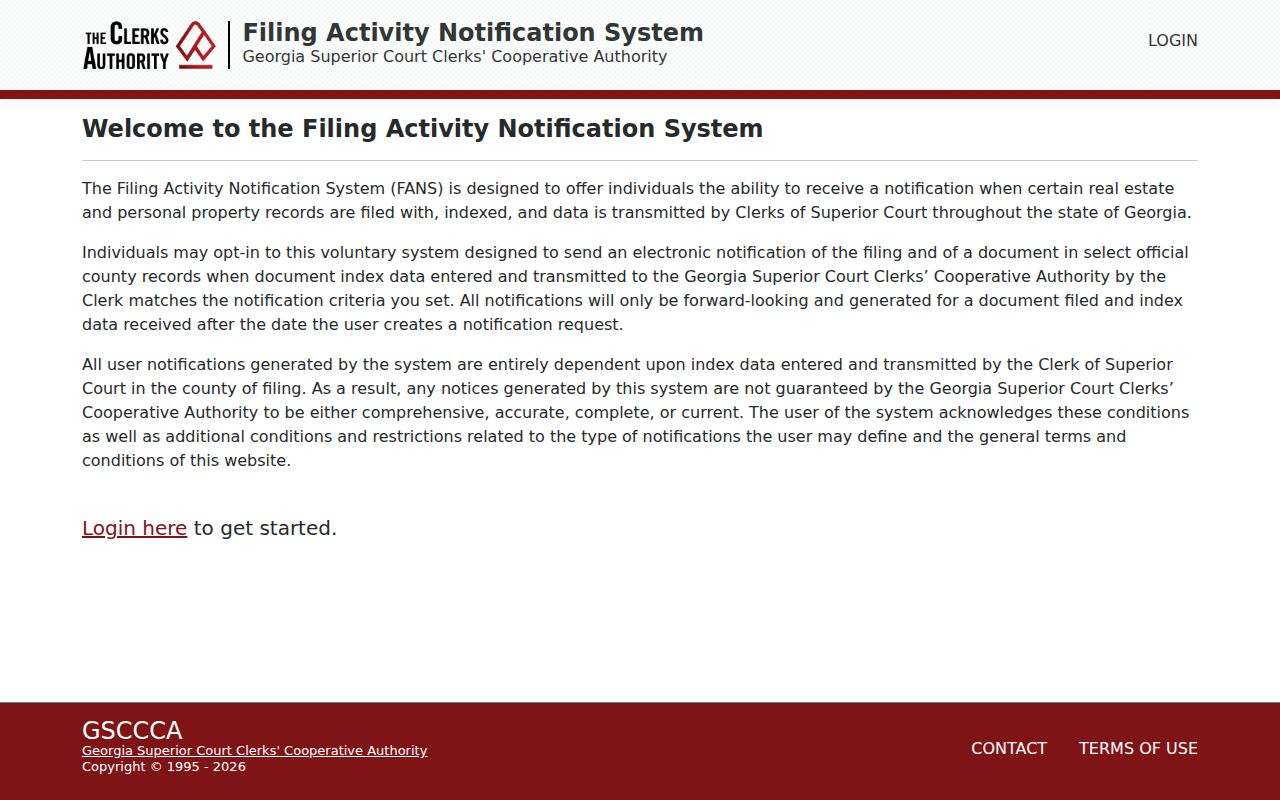
Use the alert as a prompt to check the docket, not as a substitute for the Hancock County criminal case file.
How a Hancock Criminal Case Moves
An arrest and initial appearance may come before a prosecutor files a Superior Court case. The prosecutor reviews the matter and may proceed by accusation or seek a grand-jury indictment where required. Arraignment is the court event at which the accused answers the filed charge. Motions and discovery follow. A plea or trial produces the case outcome, and the court then enters judgment and sentence. An appeal or community supervision can create later records. No reliable Hancock-specific duration was published, so the docket, not a generic timeline, should guide expectations.
Case flow: Charges Filed › Arraignment › Pretrial › Plea or Trial › Disposition › Sentencing
Hancock Prosecutor and Defender Records
The Ocmulgee Judicial Circuit District Attorney decides what charges to file. Unfiled prosecutor communications and work product are not the same as the clerk's public docket. For a final public court outcome, ask the clerk for the filed judgment rather than treating a prosecutor contact as a case search. The DA also processes post-July 2013 record-restriction requests, a task separate from ordinary case-copy access.
The official prosecutor directory supplies the Hancock routing for the circuit office.

That circuit contact helps explain where charging decisions occur, while the Superior Court clerk remains the filed-record custodian.
The Ocmulgee Circuit Public Defender has a Hancock satellite at 12630 Broad Street, Suite J, in Sparta. Its main phone is 478-445-8100. The official defender office page also provides an application route for people seeking representation.
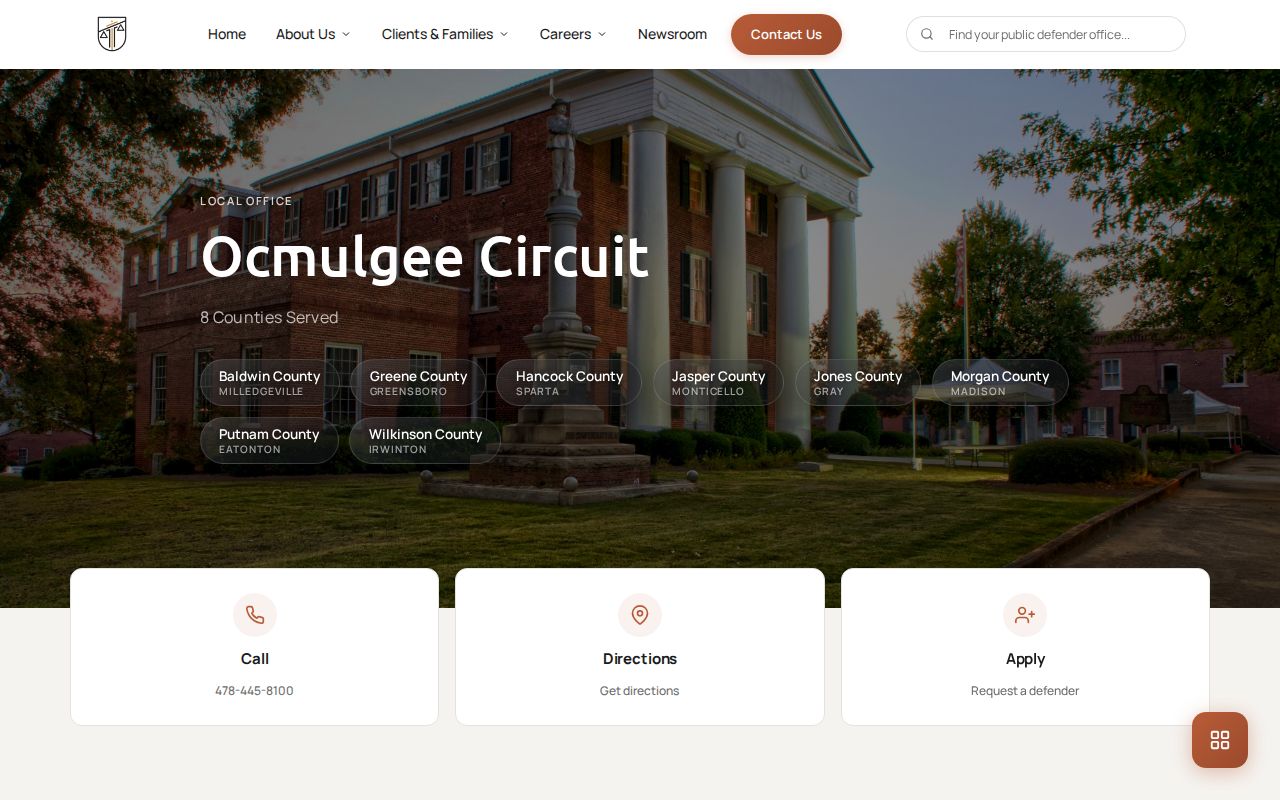
Representation files are not a public replacement for the Hancock County court docket, but the local office is the proper route for an eligible person seeking counsel.
Hancock Case Record Access Restrictions
The Georgia Open Records Act, O.C.G.A. §§50-18-70 through 77, broadly covers agency records and provides a three-business-day response framework, subject to exemptions. Court access still protects sealed matters, juvenile material, victim and minor identifiers, personal data, and information restricted by law or court order. An online record may therefore contain less than the clerk's file, while even the clerk cannot release protected content.
Access is not limited to the web. A requester may phone the Superior Court clerk, visit the counter, or send a focused written request to the clerk at 12630 Broad Street, Sparta, GA 31087. The published main number is 706-444-6644, with clerk extension 2009 and chief deputy extension 2010. Staff email addresses appear on the county court page, but Hancock does not identify them as a formal open-records inbox. Confirm the accepted submission method before sending a request. State the court, case number if known, party name, approximate filing date, and the exact document sought. Ask for current copying, certification, payment, delivery, and archive rules. The county has not posted those fees, so a requester should not rely on prices from another Georgia clerk.
Record restriction under O.C.G.A. §35-3-37 limits eligible criminal-history information from ordinary noncriminal-justice dissemination. It does not destroy the record, and it is distinct from a court order sealing a case file. If a Hancock County criminal court case does not appear, first check name spelling, case number, venue, and portal login. Then call the correct clerk. Ask whether the file is archived, sealed, restricted, not yet filed, or simply unavailable online. A name-only match should never be treated as proof of identity. Missing disposition data in a state history should be taken to the court or prosecutor that owns the outcome. An arrest or identity error instead begins with the arresting agency. For the broader difference between court outcomes and bookings, consult the Hancock County arrest lookup.